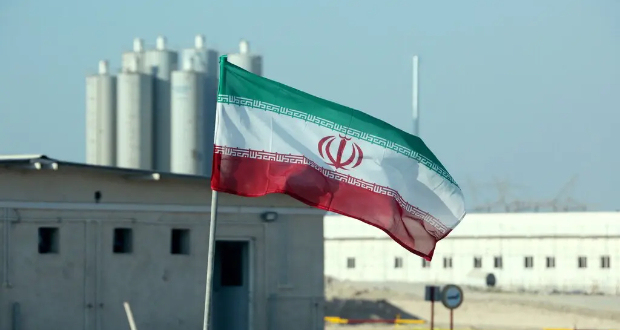
From Lebanon to the Red Sea, a Broader Conflict With Iran Looms
President Biden and his top national security aides believed last summer that the chances of conflict with Iran and its proxies were well contained.
After secret talks, they had just concluded a deal that led to the release of five imprisoned Americans in return for $6 billion in frozen Iranian funds and some Iranian prisoners. The militants that Tehran finances and arms — Hamas in the Palestinian territories, Hezbollah in Lebanon and the Houthis in Yemen — seemed relatively quiet. Iran even slowed enrichment of uranium at its underground nuclear sites, delaying its progress toward a weapon.
Hamas’s Oct. 7 invasion of Israel and Israel’s tough response have changed all that. Now American and Israeli officials, and a dozen countries working in concert to keep commerce flowing in the Red Sea, are confronting a newly aggressive Iran. After launching scores of attacks, from Lebanon to the Red Sea to Iraq, the proxy groups have come into direct conflict with U.S. forces twice in the past week, and Washington is openly threatening airstrikes if the violence does not abate.
Meanwhile, though little discussed by the Biden administration, the Iranian nuclear program has suddenly been put on steroids. International inspectors announced in late December that Iran initiated a threefold increase in its enrichment of near-bomb-grade uranium. By most rough estimates, Iran now has the fuel for at least three atomic weapons — and American intelligence officials believe the additional enrichment needed to turn that fuel into bomb-grade material would take only a few weeks.
“We are back to square one,” Nicolas de Rivière, a top French diplomat deeply involved in negotiating the 2015 Iran nuclear deal, said last week.
India targets net-zero carbon emissions by 2070, says Modi
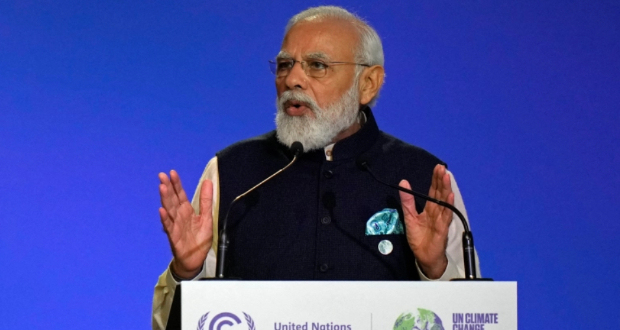
India’s economy will become carbon neutral by the year 2070, the country’s prime minster has announced at the COP26 climate crisis summit in Glasgow. The target date is two decades beyond what scientists say is needed to avert catastrophic climate impacts. India is the last of the world’s major carbon polluters to announce a net-zero target, with China saying it would reach that goal in 2060, and the United States and the European Union aiming for 2050.
COP26: What climate summit means for one woman in Bangladesh

China's carbon emissions are vast and growing, dwarfing those of other countries. Experts agree that without big reductions in China's emissions, the world cannot win the fight against climate change. In 2020, China's President Xi Jinping said his country would aim for its emissions to reach their highest point before 2030 and for carbon neutrality before 2060. His statement has now been confirmed as China's official position ahead of the COP26 global climate summit in Glasgow. But China has not said exactly how these goals will be achieved.
Why China's climate policy matters to us all
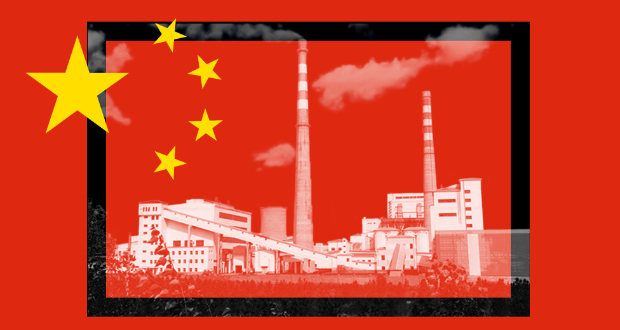
China's carbon emissions are vast and growing, dwarfing those of other countries. Experts agree that without big reductions in China's emissions, the world cannot win the fight against climate change. In 2020, China's President Xi Jinping said his country would aim for its emissions to reach their highest point before 2030 and for carbon neutrality before 2060. His statement has now been confirmed as China's official position ahead of the COP26 global climate summit in Glasgow. But China has not said exactly how these goals will be achieved.
Deliver on promises, developing world tells rich at climate talks

A crucial U.N. conference heard calls on its first day for the world's major economies to keep their promises of financial help to address the climate crisis, while big polluters India and Brazil made new commitments to cut emissions. World leaders, environmental experts and activists all pleaded for decisive action to halt the global warming which threatens the future of the planet at the start of the two-week COP26 summit in the Scottish city of Glasgow on Monday. The task facing negotiators was made even more daunting by the failure of the Group of 20 major industrial nations to agree ambitious new commitments at the weekend.