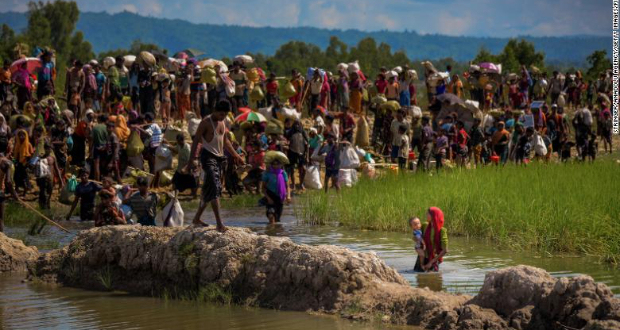
Myanmar genocide case over Rohingya atrocities can go ahead, top UN court rules
The World Court on Friday rejected Myanmar's objections to a genocide case over its treatment of the Muslim Rohingya minority, paving the way for the case to be heard in full. Myanmar, now ruled by a military junta that seized power in 2021, had argued that Gambia, which brought the suit, had no standing to do so at the top UN court, formally known as the International Court of Justice (ICJ). But presiding Judge Joan Donoghue said all states that had signed the 1948 Genocide Convention could and must act to prevent genocide, and the court had jurisdiction in the case. "Gambia, as a state party to the genocide convention, has standing," she said, reading a summary of the 13-judge panel's ruling. The court will now proceed to hearing the merits of the case, a process that will take years. Gambia took up the Rohingya's cause in 2019, backed by the 57-nation Organisation for Islamic Cooperation, in a suit aiming to hold Myanmar accountable and prevent further bloodshed. Gambia Justice Minister Dawda Jallow said outside the courtroom he was "very happy" with the decision and was confident the suit would prevail. Gambia became involved after his predecessor, Abubacarr Tambadou, a former prosecutor at the UN Rwanda tribunal, visited a refugee camp in Bangladesh and said that the stories he heard evoked memories of the genocide in Rwanda.
A representative for Myanmar said the state would do its "utmost" to protect the country's "national interest" in further proceedings. Protesters outside the court's gates hoisted a red banner with the text "Free Burma" and yelled at cars carrying the junta's representatives leaving the building after the decision.
India targets net-zero carbon emissions by 2070, says Modi
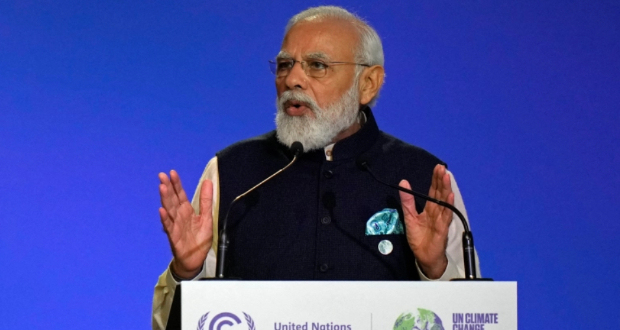
India’s economy will become carbon neutral by the year 2070, the country’s prime minster has announced at the COP26 climate crisis summit in Glasgow. The target date is two decades beyond what scientists say is needed to avert catastrophic climate impacts. India is the last of the world’s major carbon polluters to announce a net-zero target, with China saying it would reach that goal in 2060, and the United States and the European Union aiming for 2050.
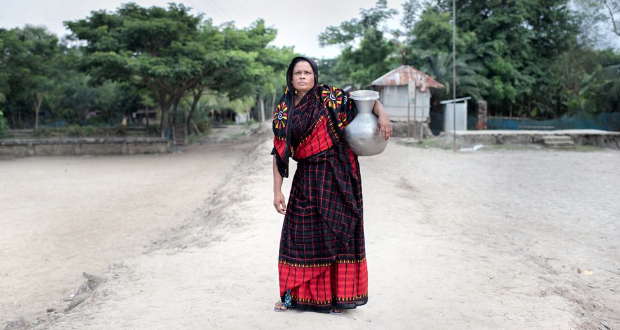
COP26: What climate summit means for one woman in Bangladesh
China's carbon emissions are vast and growing, dwarfing those of other countries. Experts agree that without big reductions in China's emissions, the world cannot win the fight against climate change. In 2020, China's President Xi Jinping said his country would aim for its emissions to reach their highest point before 2030 and for carbon neutrality before 2060. His statement has now been confirmed as China's official position ahead of the COP26 global climate summit in Glasgow. But China has not said exactly how these goals will be achieved.
Why China's climate policy matters to us all
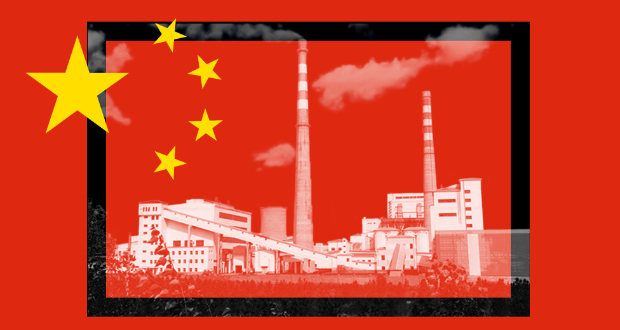
China's carbon emissions are vast and growing, dwarfing those of other countries. Experts agree that without big reductions in China's emissions, the world cannot win the fight against climate change. In 2020, China's President Xi Jinping said his country would aim for its emissions to reach their highest point before 2030 and for carbon neutrality before 2060. His statement has now been confirmed as China's official position ahead of the COP26 global climate summit in Glasgow. But China has not said exactly how these goals will be achieved.
Deliver on promises, developing world tells rich at climate talks

A crucial U.N. conference heard calls on its first day for the world's major economies to keep their promises of financial help to address the climate crisis, while big polluters India and Brazil made new commitments to cut emissions. World leaders, environmental experts and activists all pleaded for decisive action to halt the global warming which threatens the future of the planet at the start of the two-week COP26 summit in the Scottish city of Glasgow on Monday. The task facing negotiators was made even more daunting by the failure of the Group of 20 major industrial nations to agree ambitious new commitments at the weekend.