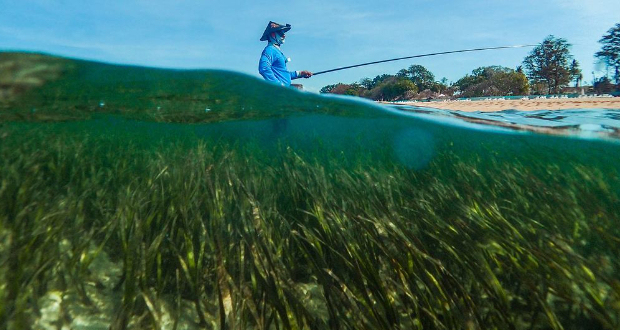
Sustainable blue economy vital for small countries and coastal populations
The world’s coastal populations contribute significantly to the global economy – an estimated $1.5 trillion per year – with expectations pointing to some $3 trillion by 2030. Ensuring ocean ecosystem health, supporting livelihoods and driving economic growth requires targeted support for key sectors, including fisheries and aquaculture, tourism, energy, shipping and port activities, and seabed mining, as well as innovative areas such as renewable energy and marine biotechnology. This is particularly important to small island developing states (SIDS), for whom marine resources are critical assets, providing them with food security, nutrition, employment, foreign exchange, and recreation. Further, through evidence-based policy interventions, these assets can also make enhanced and sustained contributions to the economic growth, and prosperity of SIDS and least developed countries (LDCs). Participating in the main interactive dialogue of the second-day of the Conference, former President of Seychelles, Danny Faure, explained to UN News that it is “extremely important that small States have a place at the table, to ensure that they can put forward their aspirations and move in the right direction”. Acknowledging that climate change continues to affect his own country, and several SIDS, Mr. Faure called on the international community to continue to support countries like Seychelles. “The blue economy is essential for the livelihoods of our people and nations. I see [investment] coming very slowly and I believe it is very important that, internationally, we continue to maintain the focus, so we can build partnerships between civil society and private sector,” he stated.
India targets net-zero carbon emissions by 2070, says Modi
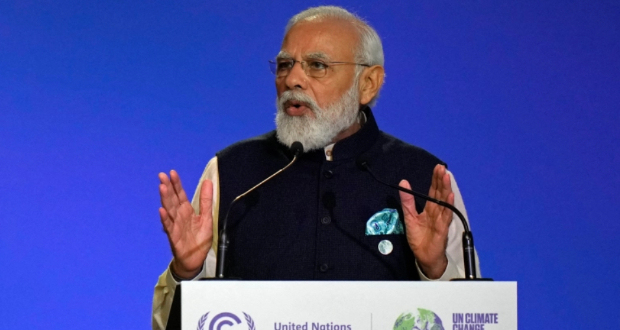
India’s economy will become carbon neutral by the year 2070, the country’s prime minster has announced at the COP26 climate crisis summit in Glasgow. The target date is two decades beyond what scientists say is needed to avert catastrophic climate impacts. India is the last of the world’s major carbon polluters to announce a net-zero target, with China saying it would reach that goal in 2060, and the United States and the European Union aiming for 2050.
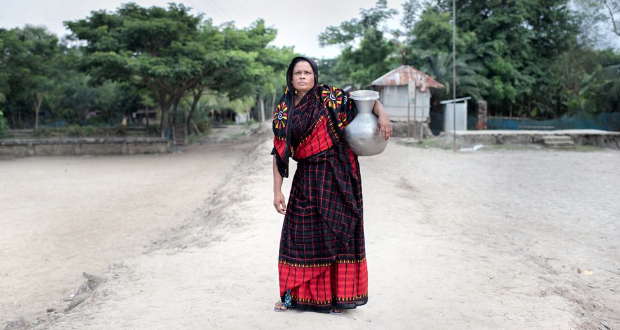
COP26: What climate summit means for one woman in Bangladesh
China's carbon emissions are vast and growing, dwarfing those of other countries. Experts agree that without big reductions in China's emissions, the world cannot win the fight against climate change. In 2020, China's President Xi Jinping said his country would aim for its emissions to reach their highest point before 2030 and for carbon neutrality before 2060. His statement has now been confirmed as China's official position ahead of the COP26 global climate summit in Glasgow. But China has not said exactly how these goals will be achieved.
Why China's climate policy matters to us all
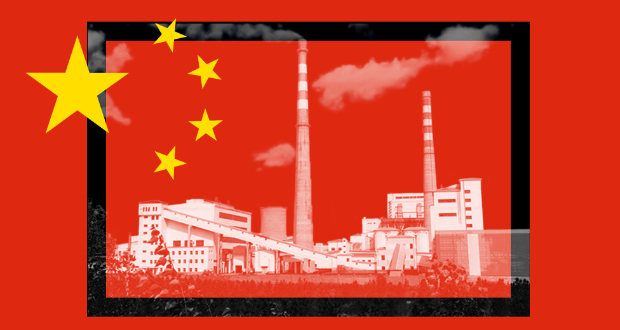
China's carbon emissions are vast and growing, dwarfing those of other countries. Experts agree that without big reductions in China's emissions, the world cannot win the fight against climate change. In 2020, China's President Xi Jinping said his country would aim for its emissions to reach their highest point before 2030 and for carbon neutrality before 2060. His statement has now been confirmed as China's official position ahead of the COP26 global climate summit in Glasgow. But China has not said exactly how these goals will be achieved.
Deliver on promises, developing world tells rich at climate talks

A crucial U.N. conference heard calls on its first day for the world's major economies to keep their promises of financial help to address the climate crisis, while big polluters India and Brazil made new commitments to cut emissions. World leaders, environmental experts and activists all pleaded for decisive action to halt the global warming which threatens the future of the planet at the start of the two-week COP26 summit in the Scottish city of Glasgow on Monday. The task facing negotiators was made even more daunting by the failure of the Group of 20 major industrial nations to agree ambitious new commitments at the weekend.