
Specific strategic plan needed to tap the possibilities of the blue economy: Experts
The government should formulate a specific plan to identify exact areas in the sea with resources to tap the possibilities of the blue economy by attracting investors in this sector, said the speakers in a Zoom discussion on Saturday titled Opportunities in Blue Economy of Bangladesh organised by Chattogram Chamber of Commerce and Industry (CCCI). They also called the authorities to form a separate ministry to ease the process of investment in this sector and for making policies. The speakers said that Bangladesh can earn $10 billion annually by introducing 1,000 vessels to carry products through the sea routes which can also employ about 50,000 people. CCCI president Mahbabul Alam inaugurated the discussion with his welcome speech while Wasfi Tamim, CEO of Bangladesh Center of Excellence, moderated the event. Mahbubul Alam said that the vast water area of 1,18,813 square kilometers along with about 710 kilometers of coastal area full of biodiversity and natural resources has made the country's blue economy very promising. But much of this fortune is yet to be explored. In view of the situation, the government has included a specific chapter in its Vision 2041 styled Bangladesh Perspective Plan 2021-2041 (PP 2041) on Blue Economy. Mabubul Alam stressed the need to formulate policies and strategic frameworks to encourage private investment with appropriate incentives and legislation. Zafar Alam, member (admin and planning) of Chattogram Port Authority (CPA), presented the keynote speech. He said, "There is huge potential and prospect in the blue economy, which can have a vital impact on our economy." Zahir Uddin Ahmed, former chief of naval staff of the Bangladesh Navy, said, "The government is telling people to invest in fishing in the sea, but there is no correct survey in this regard."
India targets net-zero carbon emissions by 2070, says Modi
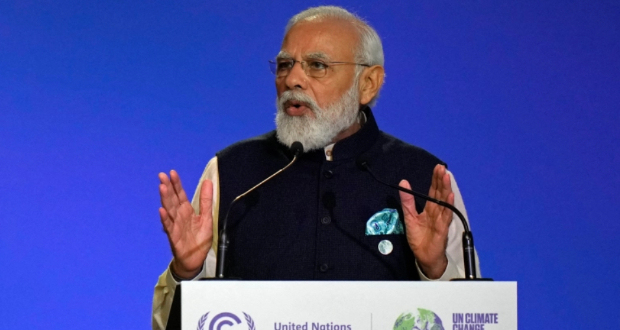
India’s economy will become carbon neutral by the year 2070, the country’s prime minster has announced at the COP26 climate crisis summit in Glasgow. The target date is two decades beyond what scientists say is needed to avert catastrophic climate impacts. India is the last of the world’s major carbon polluters to announce a net-zero target, with China saying it would reach that goal in 2060, and the United States and the European Union aiming for 2050.
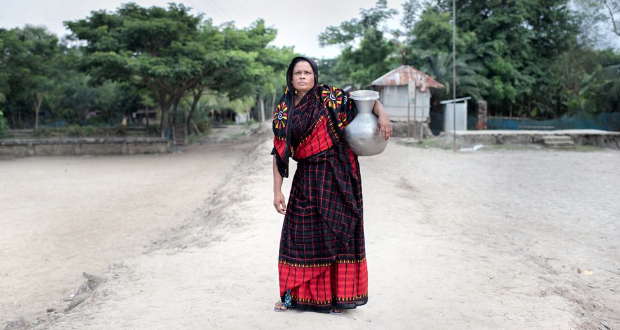
COP26: What climate summit means for one woman in Bangladesh
China's carbon emissions are vast and growing, dwarfing those of other countries. Experts agree that without big reductions in China's emissions, the world cannot win the fight against climate change. In 2020, China's President Xi Jinping said his country would aim for its emissions to reach their highest point before 2030 and for carbon neutrality before 2060. His statement has now been confirmed as China's official position ahead of the COP26 global climate summit in Glasgow. But China has not said exactly how these goals will be achieved.
Why China's climate policy matters to us all

China's carbon emissions are vast and growing, dwarfing those of other countries. Experts agree that without big reductions in China's emissions, the world cannot win the fight against climate change. In 2020, China's President Xi Jinping said his country would aim for its emissions to reach their highest point before 2030 and for carbon neutrality before 2060. His statement has now been confirmed as China's official position ahead of the COP26 global climate summit in Glasgow. But China has not said exactly how these goals will be achieved.
Deliver on promises, developing world tells rich at climate talks

A crucial U.N. conference heard calls on its first day for the world's major economies to keep their promises of financial help to address the climate crisis, while big polluters India and Brazil made new commitments to cut emissions. World leaders, environmental experts and activists all pleaded for decisive action to halt the global warming which threatens the future of the planet at the start of the two-week COP26 summit in the Scottish city of Glasgow on Monday. The task facing negotiators was made even more daunting by the failure of the Group of 20 major industrial nations to agree ambitious new commitments at the weekend.