Junta’s ongoing effort to delegitimize Rohingya
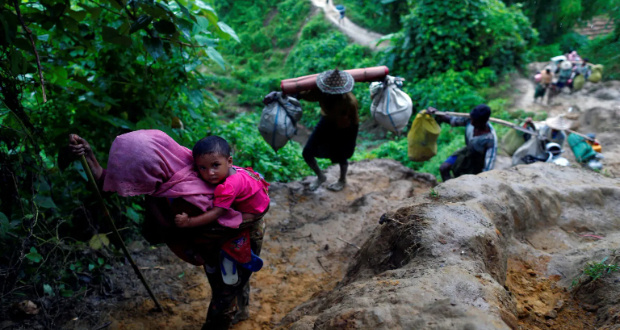
Last month, the International Court of Justice moved to dismiss initial objections by the Myanmar authorities in the ongoing case over their 2017 genocidal campaign that resulted in a mass exodus of Rohingya from their homeland. The campaign resulted in a major humanitarian crisis and the largest refugee settlement in the world. This news is justifiably making international headlines. Yet there is another dimension to the military’s ethnic-cleaning campaign against the Rohingya that has received somewhat less attention, and that is the pernicious use of identity documents as a deliberate tactic of state-based exclusion. To understand this aspect, it is important briefly to overview the history of the Rohingya’s relationship with the state apparatus in post-independence Burma, now known as Myanmar. The 1950s and ’60s saw a certain level of civic representation of the Rohingya in the country. They were issued National Registration Cards as full citizens, and passports for those Rohingya who traveled abroad. Beginning in the 1970s, the Rohingya in Rakhine state were subject to a series of military offensives that led to the first wave of refugees fleeing the region. The 1982 Citizenship Law delisted the Rohingya as a state-recognized ethnicity, leaving them stateless almost overnight.
India targets net-zero carbon emissions by 2070, says Modi
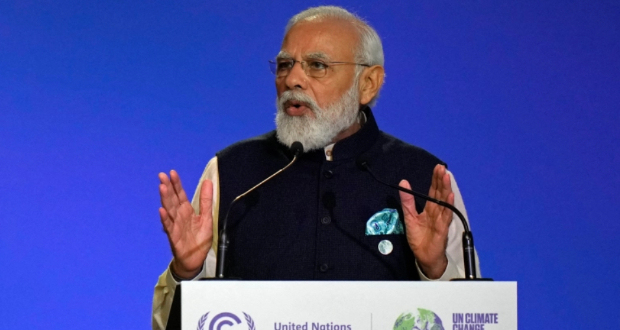
India’s economy will become carbon neutral by the year 2070, the country’s prime minster has announced at the COP26 climate crisis summit in Glasgow. The target date is two decades beyond what scientists say is needed to avert catastrophic climate impacts. India is the last of the world’s major carbon polluters to announce a net-zero target, with China saying it would reach that goal in 2060, and the United States and the European Union aiming for 2050.
COP26: What climate summit means for one woman in Bangladesh

China's carbon emissions are vast and growing, dwarfing those of other countries. Experts agree that without big reductions in China's emissions, the world cannot win the fight against climate change. In 2020, China's President Xi Jinping said his country would aim for its emissions to reach their highest point before 2030 and for carbon neutrality before 2060. His statement has now been confirmed as China's official position ahead of the COP26 global climate summit in Glasgow. But China has not said exactly how these goals will be achieved.
Why China's climate policy matters to us all
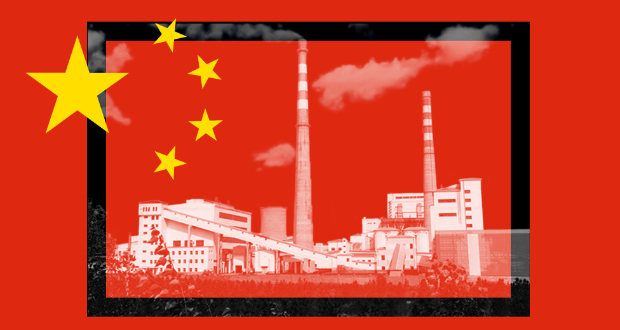
China's carbon emissions are vast and growing, dwarfing those of other countries. Experts agree that without big reductions in China's emissions, the world cannot win the fight against climate change. In 2020, China's President Xi Jinping said his country would aim for its emissions to reach their highest point before 2030 and for carbon neutrality before 2060. His statement has now been confirmed as China's official position ahead of the COP26 global climate summit in Glasgow. But China has not said exactly how these goals will be achieved.
Deliver on promises, developing world tells rich at climate talks

A crucial U.N. conference heard calls on its first day for the world's major economies to keep their promises of financial help to address the climate crisis, while big polluters India and Brazil made new commitments to cut emissions. World leaders, environmental experts and activists all pleaded for decisive action to halt the global warming which threatens the future of the planet at the start of the two-week COP26 summit in the Scottish city of Glasgow on Monday. The task facing negotiators was made even more daunting by the failure of the Group of 20 major industrial nations to agree ambitious new commitments at the weekend.