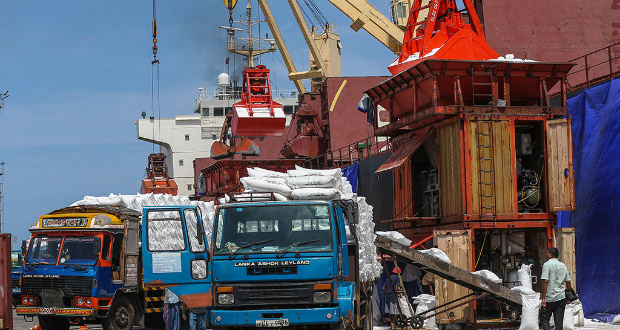
IMF agrees on $2.9 billion loan for Sri Lanka
Sri Lanka has reached a preliminary agreement with the International Monetary Fund (IMF) for a loan of about $2.9 billion, the global lender said on Thursday, as the country seeks a way out of its worst economic crisis in decades. The agreement, which Reuters first reported on Wednesday, is subject to approval by IMF management and its executive board, and is contingent on Sri Lankan authorities following through with previously agreed measures. "The staff level agreement is only the beginning of a long road for Sri Lanka," senior IMF official Peter Breuer told reporters in the commercial capital Colombo. "Authorities have already begun the reform process and it must continue with determination." The IMF requires receiving financing assurances from Sri Lanka's official creditors, besides ensuring efforts are made to reach a collaborative agreement with private creditors. "Debt relief from Sri Lanka's creditors and additional financing from multilateral partners will be required to help ensure debt sustainability and close financing gaps," the IMF said in a statement. The IMF programme, spread over 48 months, will aim to raise government revenue to support fiscal consolidation, introduce new pricing for fuel and electricity, hike social spending, bolster central bank autonomy and rebuild depleted foreign reserves. "Starting from one of the lowest revenue levels in the world, the programme will implement major tax reforms. These reforms include making personal income tax more progressive and broadening the tax base for corporate income tax and VAT," the statement said. "The program aims to reach a primary surplus of 2.3 percent of GDP by 2024," it added. Udeeshan Jonas, chief strategist at Sri Lankan investment bank CAL Group, said that the IMF's comments were largely positive. "They said the revenue measures that we've taken have been substantial (and) they're happy with what we've done from a fiscal perspective," he said. And although welfare budgets for Sri Lanka's poorest would be protected, Jonas said he expected significant austerity measures and job cuts at loss-making state-owned enterprises.
India targets net-zero carbon emissions by 2070, says Modi
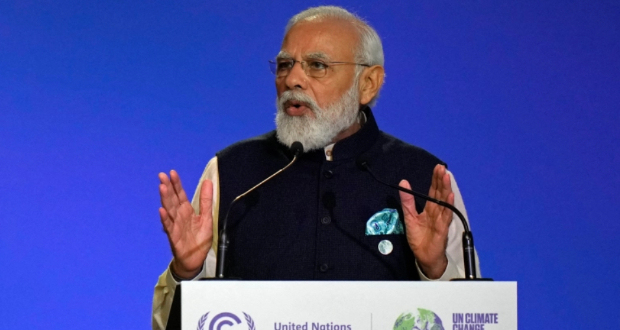
India’s economy will become carbon neutral by the year 2070, the country’s prime minster has announced at the COP26 climate crisis summit in Glasgow. The target date is two decades beyond what scientists say is needed to avert catastrophic climate impacts. India is the last of the world’s major carbon polluters to announce a net-zero target, with China saying it would reach that goal in 2060, and the United States and the European Union aiming for 2050.
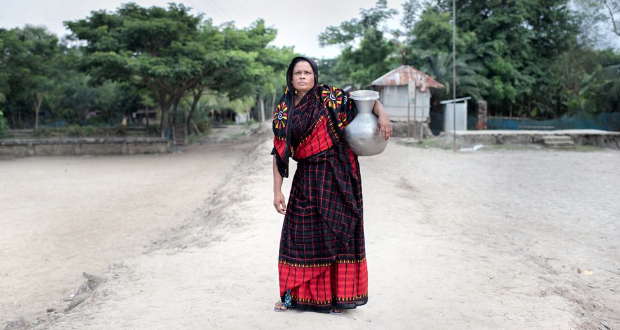
COP26: What climate summit means for one woman in Bangladesh
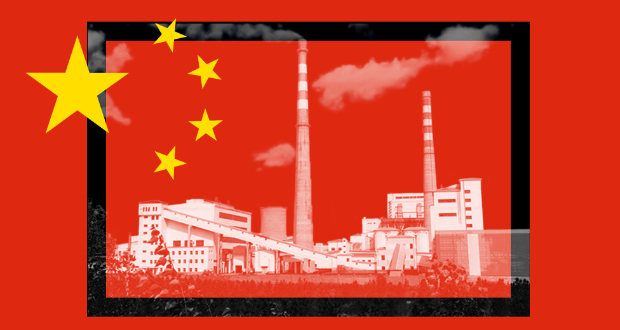
China's carbon emissions are vast and growing, dwarfing those of other countries. Experts agree that without big reductions in China's emissions, the world cannot win the fight against climate change. In 2020, China's President Xi Jinping said his country would aim for its emissions to reach their highest point before 2030 and for carbon neutrality before 2060. His statement has now been confirmed as China's official position ahead of the COP26 global climate summit in Glasgow. But China has not said exactly how these goals will be achieved.
Why China's climate policy matters to us all
China's carbon emissions are vast and growing, dwarfing those of other countries. Experts agree that without big reductions in China's emissions, the world cannot win the fight against climate change. In 2020, China's President Xi Jinping said his country would aim for its emissions to reach their highest point before 2030 and for carbon neutrality before 2060. His statement has now been confirmed as China's official position ahead of the COP26 global climate summit in Glasgow. But China has not said exactly how these goals will be achieved.
Deliver on promises, developing world tells rich at climate talks

A crucial U.N. conference heard calls on its first day for the world's major economies to keep their promises of financial help to address the climate crisis, while big polluters India and Brazil made new commitments to cut emissions. World leaders, environmental experts and activists all pleaded for decisive action to halt the global warming which threatens the future of the planet at the start of the two-week COP26 summit in the Scottish city of Glasgow on Monday. The task facing negotiators was made even more daunting by the failure of the Group of 20 major industrial nations to agree ambitious new commitments at the weekend.