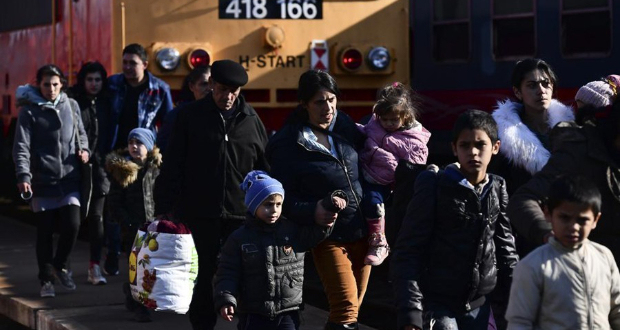
How is Europe suffering from a new wave of refugee crisis?
The war in Ukraine evokes the most significant refugee influx in Europe, with women and children making up the vast bulk of those who have fled. Since the start of the invasion of Ukraine, at least 12 million people have left their homes, according to the United Nations. More than five million people have fled to other nations, while seven million are thought to be internally displaced in Ukraine. The cities and towns of Europe are teeming with Ukrainians needing immediate medical attention, psychological counselling, and housing for worried parents, terrified kids, frail elderly people, and many others who have no identification or material possessions but only mental and physical scars of war. This war has posed a significant social and humanitarian problem for many European states and their society, both inside and outside the EU, due to the extraordinary migration of people it has brought about. Many question if Europe can continue to handle the refugee problem by offering refugees short- and long-term assistance. The war in Ukraine has evoked another fastest-growing refugee crisis, with more than 5.8 million people have fled Ukraine to neighbouring countries. Although Ukrainian migrants can also travel to safety through Slovakia, Hungary, and northern Romania, Poland is the leading destination for refugees due to its sizeable Ukrainian population of roughly 1.5 million. It seems almost cruel to bring up another problem that is developing right under the UK and EU leaders' eyes during a week when Russia threatened to acquire more land in Ukraine, gas shortages loomed, and inflation and COVID rose across Europe. Understanding what is causing the new rise is crucial. Russia began its military invasion in February 2022. Fathers hugging their children farewell through car windows, families battling to board trains in crowded chaos, and the shock and tiredness on the faces of those who have reached safety have all been witnessed by people worldwide.
India targets net-zero carbon emissions by 2070, says Modi
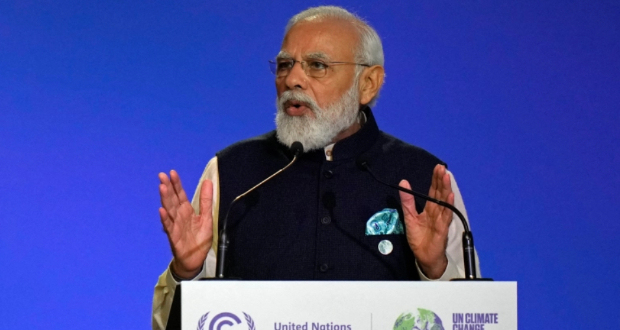
India’s economy will become carbon neutral by the year 2070, the country’s prime minster has announced at the COP26 climate crisis summit in Glasgow. The target date is two decades beyond what scientists say is needed to avert catastrophic climate impacts. India is the last of the world’s major carbon polluters to announce a net-zero target, with China saying it would reach that goal in 2060, and the United States and the European Union aiming for 2050.
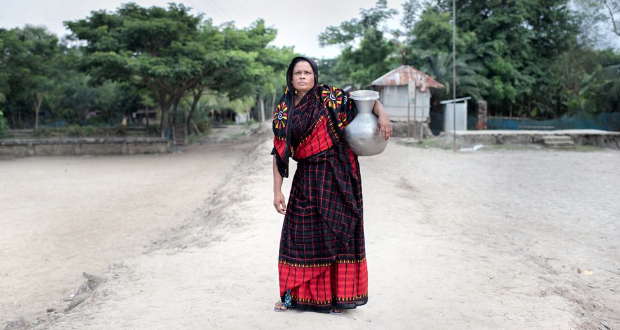
COP26: What climate summit means for one woman in Bangladesh
China's carbon emissions are vast and growing, dwarfing those of other countries. Experts agree that without big reductions in China's emissions, the world cannot win the fight against climate change. In 2020, China's President Xi Jinping said his country would aim for its emissions to reach their highest point before 2030 and for carbon neutrality before 2060. His statement has now been confirmed as China's official position ahead of the COP26 global climate summit in Glasgow. But China has not said exactly how these goals will be achieved.
Why China's climate policy matters to us all
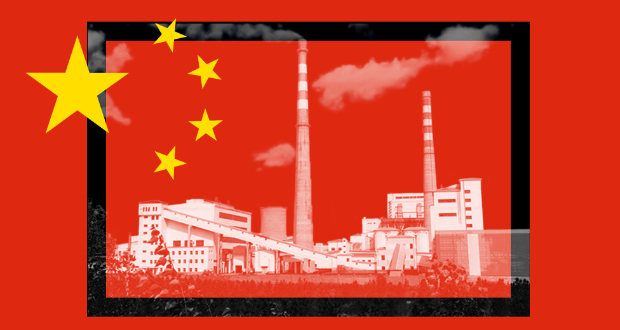
China's carbon emissions are vast and growing, dwarfing those of other countries. Experts agree that without big reductions in China's emissions, the world cannot win the fight against climate change. In 2020, China's President Xi Jinping said his country would aim for its emissions to reach their highest point before 2030 and for carbon neutrality before 2060. His statement has now been confirmed as China's official position ahead of the COP26 global climate summit in Glasgow. But China has not said exactly how these goals will be achieved.
Deliver on promises, developing world tells rich at climate talks

A crucial U.N. conference heard calls on its first day for the world's major economies to keep their promises of financial help to address the climate crisis, while big polluters India and Brazil made new commitments to cut emissions. World leaders, environmental experts and activists all pleaded for decisive action to halt the global warming which threatens the future of the planet at the start of the two-week COP26 summit in the Scottish city of Glasgow on Monday. The task facing negotiators was made even more daunting by the failure of the Group of 20 major industrial nations to agree ambitious new commitments at the weekend.